Last year I briefly worked in Unreal Engine after constructing a bridge model of I-81 in Rhino. Unreal has more realistic graphics and control than Lumion or Revit and many free or affordable options for add-ons that I think could be highly desirable for landscape designers.
Unreal is an extremely powerful 3D computer graphics game engine that can “visualize spaces or products” and “build immersive experiences”. One of the most incredible aspects of Unreal is it, “is free to use for students, educators, hobbyists, and most non-games companies making less than $1 million USD in annual gross revenue.”
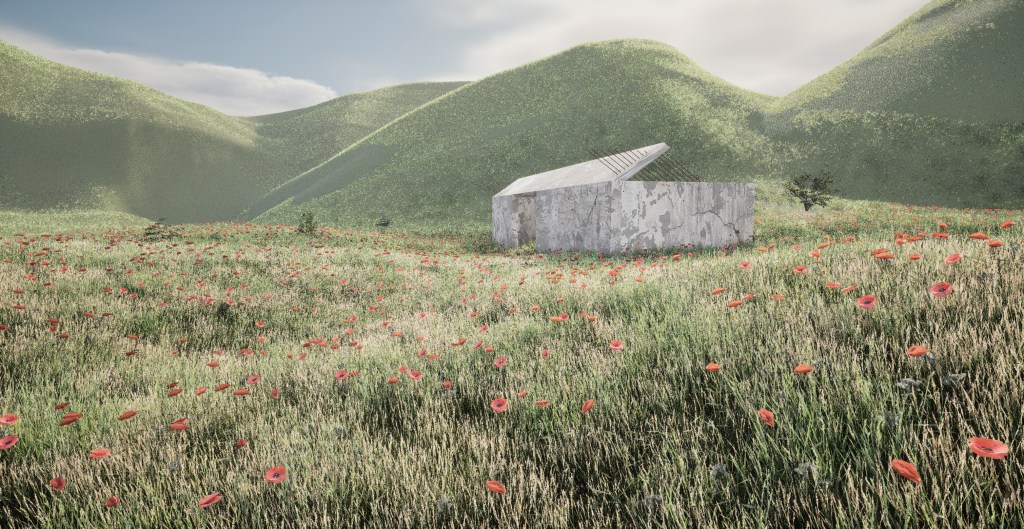
Here I have built a simple model of an abandoned building in Rhino and brought it into Unreal. Once I imported the structure into Unreal I created the surrounding landscape and added the plants. This was my first time creating a landscape from scratch and using a couple plant add-ons I wasn’t able to get to trying last year and took me about 8-10 hours to do total, a lot of which was walking through tutorials. The main tutorial I used was one by Gediminas Kirdeikis; it is one of the best tutorials I’ve ever worked through.
Under the two renderings, click the arrow for more information on the process.


Rhino Model
Above is the simple Rhino model. After learning the basics of SketchUp in 2022, I found it frustrating and difficult to work with. Rhino provided greater accuracy, a better user interface, and I found it visually more appealing to work with. Another perk is that unlike most software today, once you buy it, you own it and upgrading to the latest version every few years is fairly affordable. It’s well-reviewed and their customer service is reportedly superior to most companies.


Unreal Rendering
These are screen captures of the model space. I was looking to create the sensation of walking through hills and stumbling across an abandoned structure, indicating the landscape had been more developed at one time where it now looks wild and “natural”. Once the model was built, I then experimented with learning more about the quality of light both in how it filters through the structure and how the structure might affect what light the plants receive.
Next time, I’d like to work with a smaller landscape and more trees to look at how light and time of day effects plants and the aesthetic of an imagined landscape.
 Jesse Horning
Leave a comment